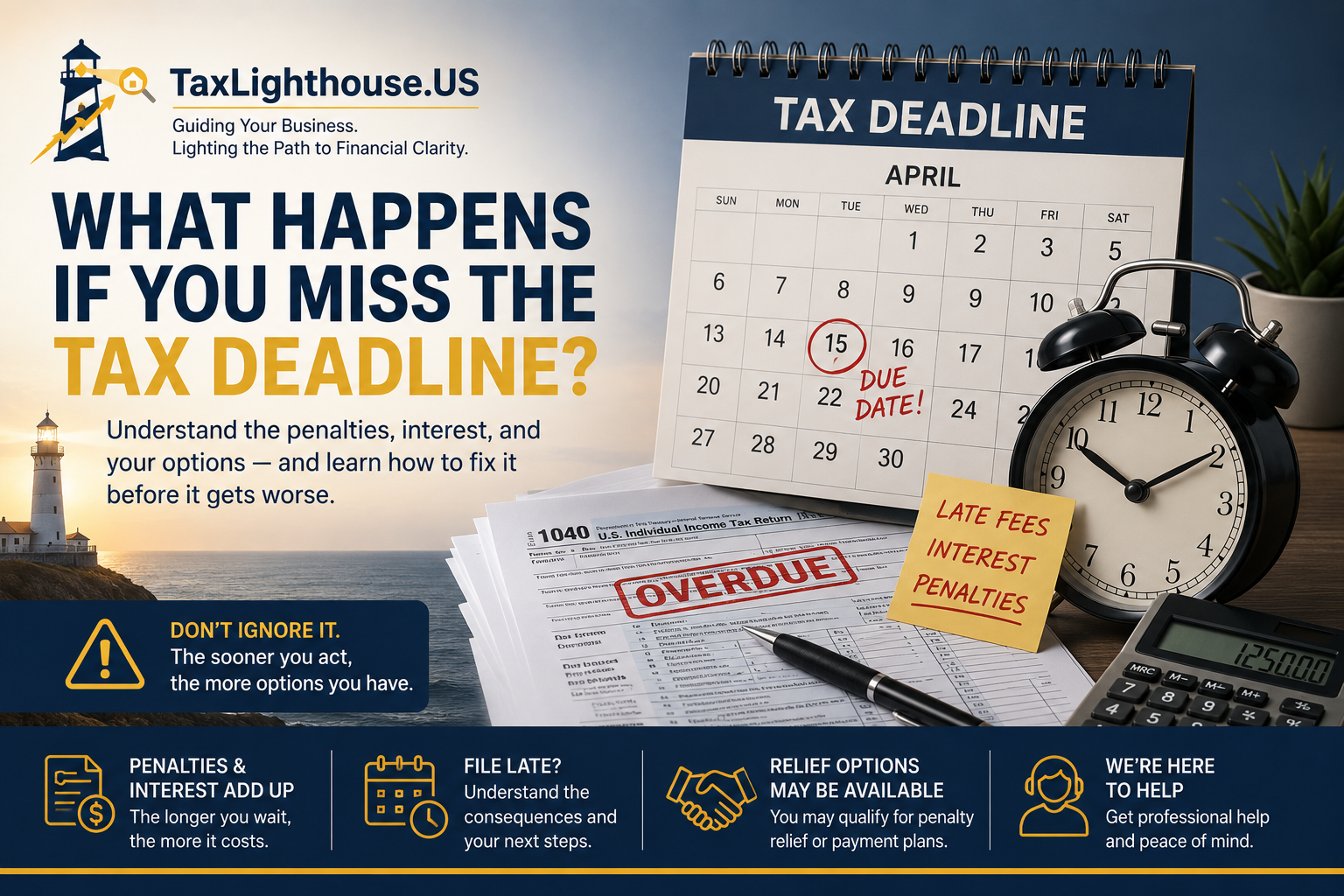
What Happens If You Miss the Tax Deadline?
Missing a tax filing deadline can be stressful, but it does not necessarily mean the situation cannot be fixed. The IRS offers several options for taxpayers who file late, and understanding the consequences can help you minimize penalties and get back into compliance quickly.
Whether you are an individual taxpayer, business owner, freelancer, or foreign-owned LLC owner, it is important to take action as soon as possible after missing a deadline.
What Is the Tax Filing Deadline?
For most individual taxpayers, the federal tax return deadline is April 15 each year.
Business returns may have different due dates:
S Corporations (Form 1120-S): March 15
Partnerships (Form 1065): March 15
C Corporations (Form 1120): April 15
Individual Returns (Form 1040): April 15
Foreign-Owned LLC Form 5472 Filings: Generally April 15
If the due date falls on a weekend or holiday, the deadline may be extended to the next business day.
What Happens If You File Late?
The consequences depend on whether you owe tax or are expecting a refund.
If You Are Owed a Refund
The IRS generally does not charge a penalty for filing late if you are due a refund.
However, you must file within three years of the original due date to claim your refund. After that period, the refund may be permanently forfeited.
If You Owe Taxes
If you owe taxes and miss the deadline, penalties and interest may begin accumulating immediately.
The longer you wait, the more expensive it can become.
Failure-to-File Penalty
The IRS typically charges a Failure-to-File Penalty when a return is filed after the due date without a valid extension.
This penalty is generally calculated as a percentage of the unpaid tax for each month the return is late.
In many cases, this penalty is much larger than the failure-to-pay penalty.
Failure-to-Pay Penalty
Even if you file your return, penalties may still apply if taxes are not paid by the deadline.
The IRS generally assesses a monthly penalty on unpaid balances until the tax is paid in full.
Interest Charges
In addition to penalties, the IRS charges interest on unpaid taxes.
Interest continues to accumulate until the balance is fully paid.
Unlike penalties, interest generally cannot be removed except in limited circumstances.
What If You Filed an Extension?
Many taxpayers mistakenly believe an extension gives them extra time to pay.
An extension provides additional time to file the return, but not additional time to pay taxes owed.Any estimated tax should generally be paid by the original filing deadline to avoid penalties and interest.
Can You Avoid Penalties?
Possibly.
The IRS offers several relief options.
First-Time Penalty Abatement
Taxpayers with a history of compliance may qualify for First-Time Penalty Abatement.
This relief can remove certain penalties if eligibility requirements are met.
Reasonable Cause Relief
The IRS may waive penalties if you can demonstrate reasonable cause, such as:
- Serious illness
- Natural disasters
- Death in the family
- Other significant circumstances beyond your control
Supporting documentation is usually required.
What If You Cannot Pay the Full Balance?
You should still file your tax return on time, even if you cannot pay.
Filing prevents larger failure-to-file penalties from accumulating.
The IRS offers several payment solutions, including:
- Installment Agreements
- Short-Term Payment Plans
- Partial Payment Installment Agreements
- Offers in Compromise (for qualifying taxpayers)
What About Businesses?
Businesses can also face substantial penalties for late filing.
Common examples include:
- Late Form 1120-S filings
- Late Form 1065 filings
- Late payroll tax returns
- Late Form 5472 filings for foreign-owned LLCs
Certain business penalties can quickly become significant, especially when multiple owners or shareholders are involved.
Foreign-Owned LLCs Face Special Risks
Foreign-owned LLC owners should pay particular attention to Form 5472 filing requirements.
Failure to file Form 5472 can result in penalties beginning at $25,000 per year, even if no tax is due.
Many foreign business owners mistakenly believe they have no filing obligations because they earned little or no income.
What Should You Do If You Missed the Deadline?
If you missed the deadline:
1. Do not panic.
2. Gather your tax documents.
3. File the return as soon as possible.
4.Pay as much as you can.
5. Explore penalty relief options.
6. Contact a tax professional if you need assistance.
Taking action quickly often reduces penalties and prevents additional compliance issues.
How TaxLighthouse Can Help
At TaxLighthouse.us, we assist taxpayers with:
- Late tax return preparation
- IRS penalty relief requests
- Installment agreements
- Form 5472 compliance
- Individual and business tax filings
- IRS notice responses
Whether you are filing a few weeks late or several years behind, we can help you get back into compliance.
Final Thoughts
Missing a tax deadline is a common problem, but it should never be ignored.
The sooner you address the issue, the more options you will have to reduce penalties and resolve outstanding tax obligations.
If you have missed a filing deadline, professional guidance can help you understand your options and avoid unnecessary costs.
Need help with a late tax return?
Contact TaxLighthouse.us today for professional tax filing and IRS compliance assistance.