What Is Supplemental Security Income (SSI)? A Complete Guide for 2026
If you or a loved one has limited income and resources, you may qualify for Supplemental Security Income (SSI).
This federal program provides monthly financial assistance to help eligible individuals pay for basic living expenses.
Many people confuse SSI with Social Security retirement or disability benefits, but they are different programs with different eligibility requirements.
In this guide, we'll explain what SSI is, who qualifies, how much you may receive, and how to apply.
What Is Supplemental Security Income (SSI)?
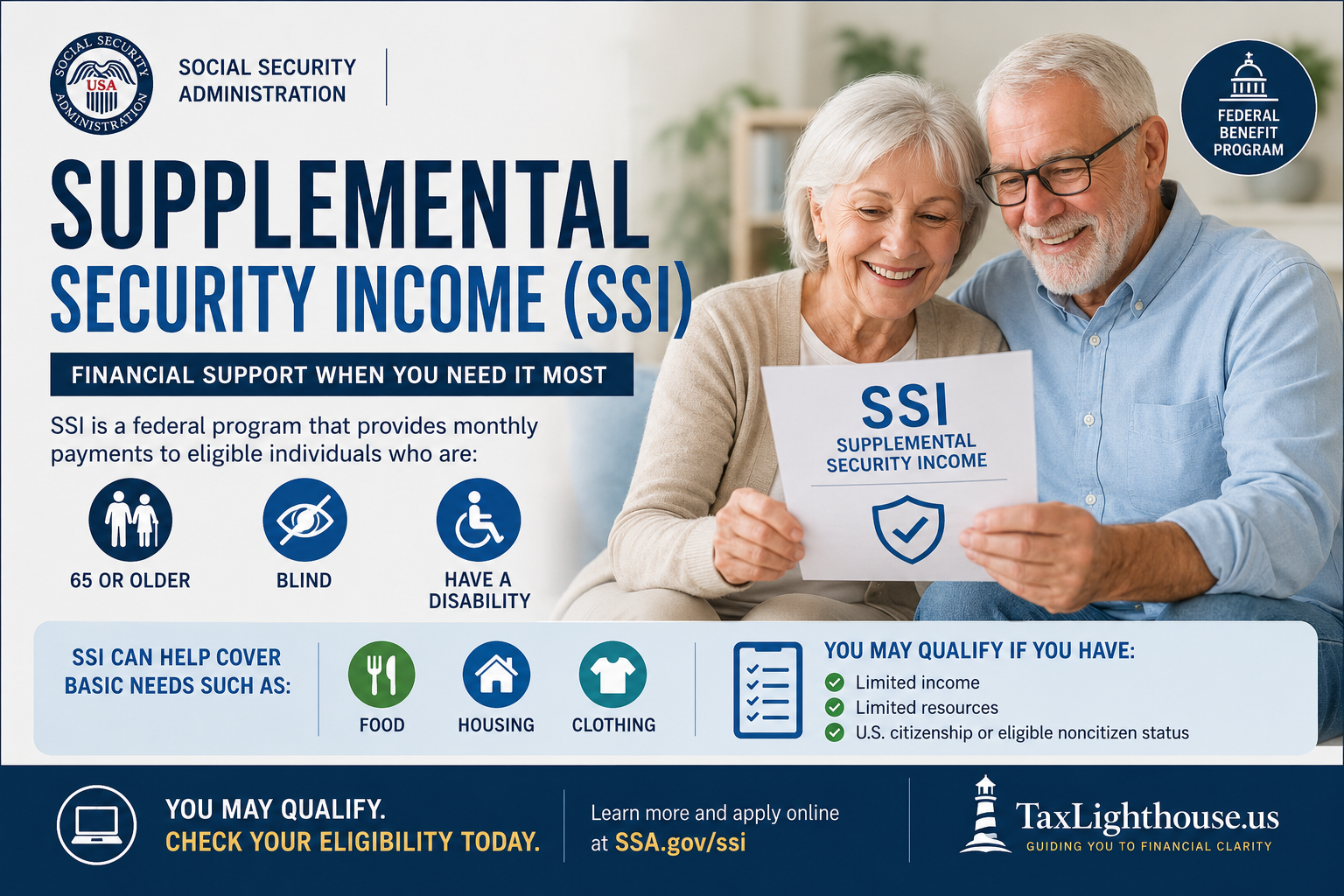
Supplemental Security Income (SSI) is a federal benefit program administered by the Social Security Administration (SSA).
The program provides monthly payments to eligible individuals who have limited income and financial resources and who are:
- Age 65 or older
- Blind
- Living with a qualifying disability
Unlike Social Security retirement benefits, SSI is not based on your work history or the Social Security taxes you've paid. Instead, eligibility is based primarily on financial need.
Who Can Qualify for SSI?
To qualify, you generally must:
- Be age 65 or older, blind, or have a qualifying disability.
- Have limited income.
- Have limited resources.
- Be a U.S. citizen or meet certain noncitizen eligibility requirements.
- Live in one of the 50 states, the District of Columbia, or the Northern Mariana Islands.
The Social Security Administration reviews both your income and available resources when determining eligibility.
What Counts as Income?
SSI considers many types of income, including:
- Wages from employment
- Self employment income
- Social Security benefits
- Pensions
- Certain gifts or financial support
- Some other government benefits
However, not all income counts toward the SSI limit. Some types of income are excluded under SSA rules.
What Counts as Resources?
Resources generally include:
- Cash
- Bank accounts
- Stocks and bonds
- Additional real estate
- Some vehicles
- Other valuable property
Certain assets usually do not count, including:
- Your primary home
- One vehicle used for transportation (in many cases)
- Personal household goods
- Personal belongings
How Much Can You Receive?
The monthly SSI payment changes each year based on federal benefit rates.
The amount you receive depends on:
- Your income
- Your living arrangements
- Whether your state provides additional SSI payments
- Other eligibility factors
Because every situation is different, the actual payment amount varies from person to person.
Can You Work and Receive SSI?
Yes.
Many people believe working automatically disqualifies them from SSI, but that isn't always true.
SSI has special work incentive programs that allow many recipients to continue working while still receiving benefits, depending on their earnings.
How Do You Apply for SSI?
You can apply by:
- Visiting your local Social Security office.
- Calling the Social Security Administration.
- Starting an application online if you meet the online eligibility requirements.
Before applying, gather documents such as:
- Proof of identity
- Social Security number
- Birth certificate
- Medical records (if applying due to disability)
- Bank account information
- Income documentation
- Information about your assets
Having these documents ready can help speed up the application process.
SSI vs. Social Security Disability Insurance (SSDI)
Many people confuse SSI with SSDI.
SSI
- Based on financial need
- Does not require a work history
- Funded through general federal tax revenues
SSDI
- Based on your work history
- Requires enough work credits
- Funded through Social Security payroll taxes
Some individuals may qualify for both programs.
Do SSI Benefits Affect Your Taxes?
In most cases, SSI payments are not taxable for federal income tax purposes.
However, if you receive other taxable income or additional Social Security benefits, your tax situation may differ.
If you're unsure whether you need to file a tax return, it's a good idea to consult a qualified tax professional.
Final Thoughts
Supplemental Security Income can provide valuable financial assistance to older adults, individuals with disabilities, and people who are blind who have limited income and resources.
Because eligibility rules can be complex, it's important to understand how income, assets, and living arrangements may affect your benefits.
If you're unsure whether you qualify, reviewing the requirements before applying can save time and help you avoid common mistakes.
Need Help With Your Tax Questions?
At TaxLighthouse.us, we help individuals and businesses with:
- Individual Tax Preparation
- Business Tax Returns
- IRS Notices and Tax Assistance
- Tax Planning
- Foreign Owned LLC Compliance
- Bookkeeping and Accounting Services
Contact TaxLighthouse.us today for professional U.S. tax guidance.